
Mobility-Related Questions to Ask BEFORE you Book your Lodging
Where we stay when we travel is a large part of our trip experience. For some of us, where we stay is just as important as what we do during the day. For others, it is simply a place to sleep and recharge for the next day. The type of lodging, location, amenities, etc are important factors and so is your mobility level. Here are mobility-related questions to ask your potential lodging prior to booking as well as questions to consider about your own mobility needs and preferences.

Room Features
Based on your needs and preferences, you may want to ensure your hotel room or rental guarantees certain accessibility features. Considering the following:
- Do you need a fully accessible space?
- Walk-in shower vs. bathtub
- Height of bed and toilet
- Are there steps/stairs within the space?
- Size of room and space in between furniture
If you have specific mobility needs, you will want the hotel or rental to guarantee they will provide them. If you need an accessible or barrier free room as you use a wheelchair or walker, you will want to book this room specifically or have written confirmation that the room or rental you are booking is such a space. Accessible or barrier free rooms are rooms that do not have stairs/steps and have adequate space for a wheelchair user to maneuver around the bed and in the bathroom.
In some countries like the United States, hotel chains specifically list these rooms to book, thus guaranteeing you an accessible room. This is not as frequent with European hotel chains nor with small hotels. Apartment/home rental websites vary with this type of information in their listings. Read more about the ADA’s requirements for U.S hotels in this post from wheelchairtravel.org. Outside of the United States, standards for accessibility are not as uniform so it is in your best interest to confirm directly with each place you stay.
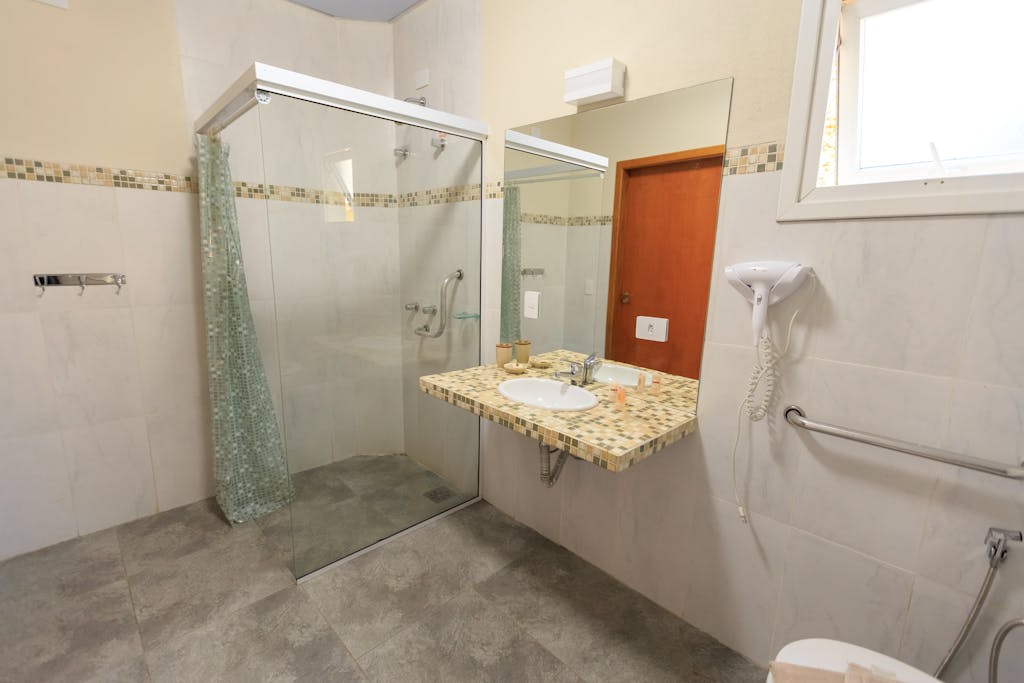
Even if you do not need an accessible room, consider that some spaces may be small or that you may have a stair step or two to get into the bathroom. In older buildings, hotel rooms or a rental unit may be much smaller than you expect. This may require you to walk sideways or backwards in the bathroom and around the bed. Contact the hotel or host and ask specific questions based on your needs. Will they be able to guarantee you a room without steps or a room that has a walk-in shower instead of a bathtub? If you contact them via email, you will have their responses in writing to refer to later if necessary.

Accessible Common Areas/Breakfast Room
The next mobility-related question to ask your potential lodging is in regards to common areas. If you enjoy having breakfast in your hotel and/or spending time in their sitting areas, you will want to make sure you can easily access them. Particularly in hotels in old buildings, dinning and common rooms may be on separate floors or have a couple steps to get between them. Also consider the types of seating provided if getting up from a chair is difficult for you. If you sit in a wheelchair or on your four-wheeled walker seat for meals, you may want to ensure their dining area can accommodate that.
You may also want to ask if there are additional steps to your room or rental once you have reached your floor. I stayed in a hotel in Provence recently that required me to climb two separate sets of 3 stair steps between my room and the elevator. It may be helpful to consider the overall size of hotel. If there are dozens of rooms on each floor, requesting a room by the elevator could save you measurable distance each day.

Elevators
Consider the importance of an elevator for where you plan to stay. Can you be guaranteed a lower floor if there is no elevator? Are able to climb one to two flights of stairs at the end of a long day on your feet touring the sites? Even if your accommodation has an elevator, consider what happens if it is out of order. Are there multiple elevators or will you be able to climb stairs if the sole elevator is non operational? If staying in a hotel, is someone available to carry your bags up the stairs or would you need to?
If there is an elevator, you may also want to confirm the size of the elevator. Is it large enough to accommodate the mobility device you use? Will you be able to turn around in the elevator or will you have to back out? Are you comfortable stepping out of an elevator backwards while managing your luggage at the same time?

24-Hour Front Desk
A perk of a hotel over a rental is that many hotels offer a 24-hour front desk or reception. Having access to a local at anytime can help manage any stressful or unplanned situations such as needing a pharmacy, a doctor, or where to buy shoes or clothes. If this is important to you, check to see if this is available where you plan to stay.
Steps to Enter your Lodging
Consider how many steps there are to enter/exit the hotel or rental building. Is there a railing? Is a ramp available if you use a wheelchair, scooter or walker? Will you be able to maneuver the steps with your luggage? Using street view in Google Maps can be a quick way to check how you enter into a building. Unsure how to view this? Read our post on Google Maps Tips and Tricks.

Taxi Drop-off/Pick-up
Lastly, how close to your lodging will you be able to be dropped off? The answer may not always be directly outside the entrance. If your hotel or rental is located on a pedestrian street, taxis may not be able to bring you directly to the front of your accommodation. Are you able to walk a block or two in between? Also, consider how you will maneuver this with luggage when you are checking in and checking out.
Resources for Mobility-Related Lodging Questions
Booking.com’s accessible hotels search page (Even if you do not book through Booking.com, they are a great way to research lodging options, especially for mobility-related features).
7 Tips for Making Wheelchair Accessible Hotel Room Reservations – from FreeWheelinTravel.org
I hope this is helpful as you plan your next trip! Ensuring where you stay fits your needs is key to a successful trip!
Read Related Have Age Will Travel Posts
A Mobility Guide for European Train Travel
Mobility Considerations to Discuss when Traveling with Friends and Family
Mobility Considerations for Types of Travel
Pin this post to Read later or to Share with Others!