Vienna and your Mobility – An Overview
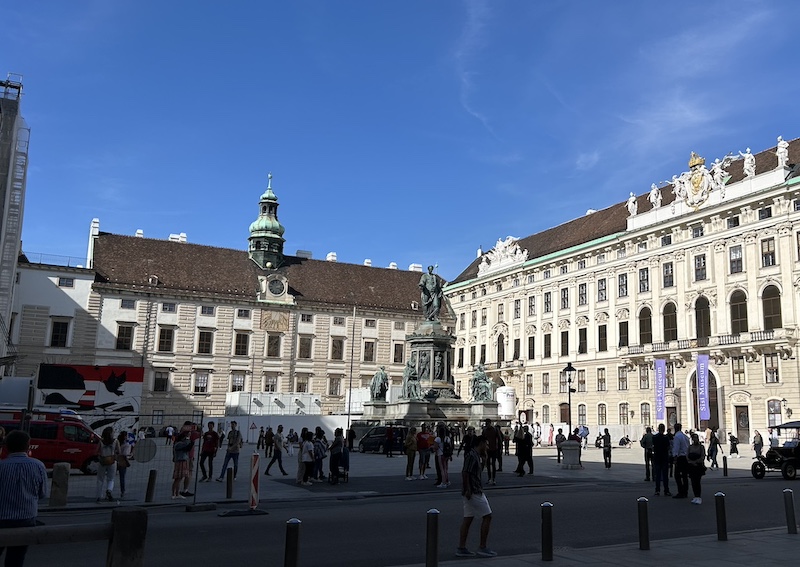
Vienna, Wien in German, is a beautiful and sophisticated city. It is the capital of Austria and features grand buildings, mostly from the 18th and 19th centuries. This post gives you an overview of Vienna’s terrain, it’s top three tourist sights and how to get around with your mobility level in mind. Detailed posts are available and are linked in each section below post. To learn how these Location Guide posts are organized, read this post first.
Here are my promises to you about each and every Location Guide:

Terrain
The center of Vienna likely contains the majority of sights you plan to see. The center, or Innere Stadt, is the old town and is lined by a multi-lane traffic ring called the Ringstraße. The most mobility-friendly feature of Vienna’s terrain is that it is flat. Aside from getting into buildings, you will not need to walk uphill or up stairs when wandering the city. To learn more about Vienna’s terrain, visit our Vienna Terrain post.
Sidewalks
The sidewalks in Vienna are mostly on both sides of streets and most are concrete or asphalt and flat without cracks or rises. Sidewalks are only a couple of inches above street level. Sidewalks near intersections tend to gradually decline to become flush with the street verses more obvious curb cuts in other cities. Some walkways, such as along the Ringstraße, provide half of the pathway for pedestrians and half for cyclists. Pay attention to signage, often posted down on the pavement.
Squares and Parks
Vienna has numerous squares, traffic-free streets, parks and gardens. The parks and gardens can be a way to catch some quietude compared to places like bustling Stephansplatz. Most squares have large, smooth pavers to walk on. Parks and gardens have a mix of paved walkways, dirt and packed gravel or pebbles.
Top Sites in Vienna
Schönbrunn Palace, the Wiener Riesenrad and the Kunsthistorisches Museum are the most visited sites in Vienna. For all three of these sites, tickets can be purchased online. It is highly recommended that you purchase your Schönbrunn Palace tickets in advance. For more information on these sites, read our Accessibility of Vienna’s Top Sites post.
Schönbrunn Palace
While Schönbrunn Palace and its garden grounds are vast, it is a largely barrier-free site. There are some portions of the gardens that can only be reached via stairs but the rest of the the palace and gardens are level or have ramps and elevators. The gardens are paved with small compact pebbles.
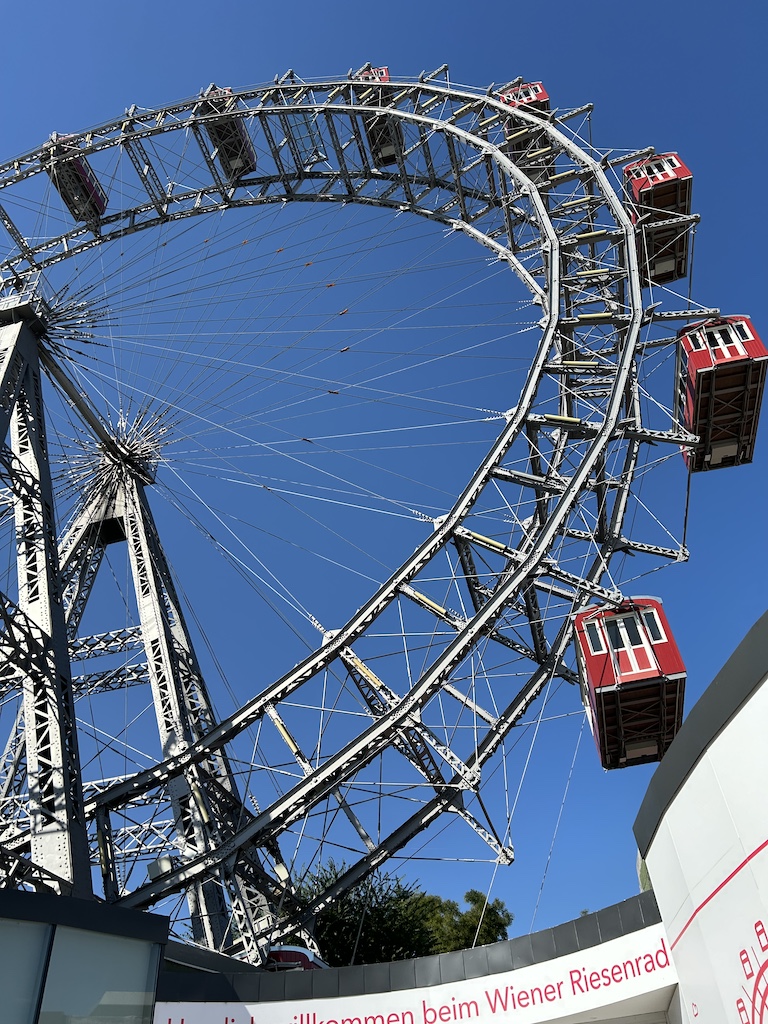
Wiener Riesenrad
Vienna’s famous ferris wheel, the Wiener Riesenrad is located in the Prater – an amusement park that is part of a green park with many paved trails. You can ride the ferris wheel to see beautiful views of Vienna.
Kunsthistorisches Museum
The Kunsthistorisches Museum is an art and art history museum which includes works from multiple centuries and a portrait gallery holding works of famous painters. There is a side entrance for those who cannot ambulate stairs but once inside, elevators allow access for all to enjoy the artwork.

Transportation
Vienna has an underground (metro), trams, buses, taxis and Ubers, providing plenty of ways you can get around the city. Based on your mobility level, Vienna will have an option for you. Vienna was awarded the 2025 Access City Award by the European Union for “…leading the way in accessibility for persons with disabilities”. Learn more about getting around Vienna and your transportation options in our Vienna – Transportation and your Mobility post.
To/from Airport
Getting to or from the airport depends on how much you want to be carrying your luggage, how much time and money you want to spend. There is a airport-specific direct train (CAT) as well as regional trains, airport buses, taxis, and Ubers available for you based on your needs and priorities.
To/from Train Station
The two main train stations in Vienna are the Hauptbahnhof and Westbahnhof. The underground has stops at both stations. Trams and buses are also available outside both stations to get you to your destination as well as taxi stands. Both stations are barrier-free and provide elevators and accessible bathrooms.
Getting around Vienna
Vienna’s public transportation covers most locations tourists visit, requiring only a couple of blocks walking or wheeling. The majority of trams, underground stations and buses are barrier-free. Read our detailed post if you would like to learn more.
Links to our other Location Guide Overview Posts
Mobility Requirements for Visiting London: An Overview
An Overview: Paris and your Mobility
An Overview: Rome and Your Mobility
Visiting Madrid: A Mobility Overview
Pin this Post to Save for Later or to Share!