
Rome: Terrain and Your Mobility
Rome’s Terrain and Your Mobility
Rome is the capitol of Italy. It’s history is evident. You’ll have the chance to walk on centuries old roads and buildings are from many different centuries. The main sights tourists visit are in the city center within the Aurelian walls. There are no truly pedestrian streets as there are in other big cities. Larger streets will have sidewalks of varying widths. Smaller streets will require you to share the road with a scooter or car. Some of these streets can get quite narrow with a pedestrian and a car trying to get through. Often, you will need to step towards the side of a building to let a vehicle go by. Knowing more about Rome’s terrain will help you navigate the city based on your mobility level.
(Last updated April 2025)

Cobblestones
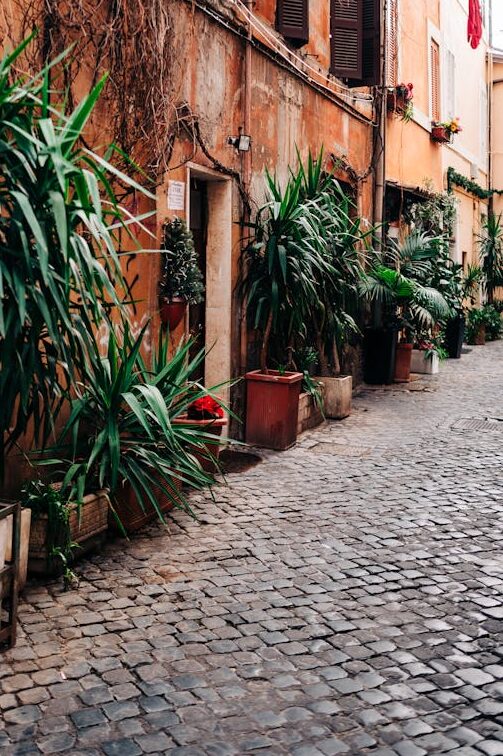
You will frequently encounter cobblestone roads. While Rome is covering major streets with asphalt, quieter streets are all cobblestones. Some cobblestone lanes have been smoothed down. Smaller, less popular streets can have varying heights of cobblestone. Make sure to watch out for loose cobbles as you will feel them shift under your feet!
Pedestrian Friendly Streets
Here are some of the more mobility-friendly streets in Rome. For more quaint streets, the tour company Through Eternity Tours, lists their favorite Roman streets. Note, some on their list may be less conducive for people with mobility considerations based on the terrain.
- Via del Corso – a busy traffic street but with wide concrete sidewalks on each side with lots of shops. It runs from the Victor Emanuel monument straight to Piazza Del Popolo near the Borghese Gardens.
- Via dei Fori Imperiali – runs from the Victor Emanuel monument to the Colosseum with great views over the Roman Forum and Imperial Forum. Wide sidewalks like both sides of the street. The street is vehicle free on Sundays. This can be a nice place to stroll but can get quite crowded.
- Via dei Coronari – a lovely, quiet street to stroll. It is narrow with no sidewalks but the cobbles are smooth. Likely the only vehicles you encounter will be of those who live or work on this street.
- Via Giulia – another picturesque street to stroll. It is not as narrow as Coronari but still has no sidewalks. A portion of it has painted pedestrian walking sections and is all cobblestones.

Piazzas
Roman piazzas (town squares) are often where locals still gather as they have been doing for centuries. Piazzas can be great places to walk as they are large and vehicle free, except for emergency vehicles and delivery vehicles. Also, piazzas are usually flat and can include cafes or restaurants to rest your legs as needed.
- Piazza del Popolo – A large piazza near the Borghese Gardens
- Piazza di Spagna – A smooth cobblestone piazza at the base of the Spanish Steps
- Piazza della Rotonda – In front of the Pantheon. Note, this can get busy with tourists mid day and in high season. See our post on Mobility Requirements for Rome’s Top 3 Sights to learn how accessible the Pantheon is to visit!
- Piazza di S. Lorenzo in Lucina – Off of the Via dei Coronari with larger pavers under foot instead of cobblestones.
- Piazza Navona – Originally an athletic stadium in the first century AD. This piazza is now lined with restaurants and features a large 17th century fountain and church.

Hills
Rome is a city of seven hills but the center of Rome is fairly flat. The two hills you will certainly encounter are:
- Palatine Hill: Adjacent to the Forum and 40 meters (131ft) above it, the Palatine Hill hosts several ancient Roman structures including the Palace of Domitian, the House of Augustus, the House of Tiberius and more. The walk up is fairly steep but an elevator is available.
- Capitoline Hill: The Capitoline Museum, the Marcus Aurelius statue and the Basilica di Santa Maria in Ara coeli sit on this hill. From via del Teatro di Marcello, it is 124 marble steps up to the front door of the Basilica. The path up to the Capitoline Museum is less steep and slightly lower in altitude compared to the Basilica.
Note: Utilize Google Maps! Large cities like Rome have street views available for almost all streets where tourists go. This will give you a block-by-block view of what your will be walking or wheeling over. Also, using the directions feature, you can see what kind of elevation gain/loss you will experience which can help you decide how you’ll get between those locations. Landmarks and buildings that have accessible wheelchair entrances are now indicated on Google Maps. You will see a blue wheelchair icon when you hover your cursor over the location. This can be a great resource for you as you assess the accessibility of Rome’s terrain based on your mobility level. Take a look at my Google Maps tips and Tricks post to see a step-by-step guide on how to do this!
Pin the Rome’s Terrain and your Mobility Post or Share with Friends!

Read our other posts about Rome:
An Overview: Rome and Your Mobility