Mobility Guide for European Train Travel
An Overview of Mobility Requirements for European Train Travel
Traveling by train in Europe is efficient. Trains get you to and from most major tourist locations and can be faster than flying within the continent. Train stations are usually in the center of a city whereas airports are on the outskirts. When considering getting to an airport, checking luggage, security lines and waiting to board, many trips are shorter by train, not to mention less tiring! You will also spend less time standing and lugging your luggage when traveling by train. European train travel continues to improve in terms of accessibility but it is certainly not perfect. Read on about mobility requirements for European train travel!
In this post, we will cover mobility requirements for European train travel. I have also included links at the bottom for the official websites of the 17 largest European train operators and their accessibility pages. These links will help you determine what different train companies offer in terms of mobility assistance as well as what is required of you in terms of walking distances, need to climb stairs, etc. at specific train stations. If you are looking for more general information about train travel in Europe, The Man in Seat Sixty-One is a great resource that I also use frequently. Want more mobility information about different types of travel? Read our Ultimate Guide to Transportation for your Trip
Note: If planning on traveling by train, I strongly recommend researching the train stations you will be using before securing your plans. This is especially important if you use a wheelchair or walker or cannot manage an escalator or a flight of stairs. Not all stations will have an elevator to your train track. If there is one, you will need a backup plan in the event it is broken. Most of the train accessibility links I provide below include an online form or provide an email address for you to address your needs directly with the train company.

Stations
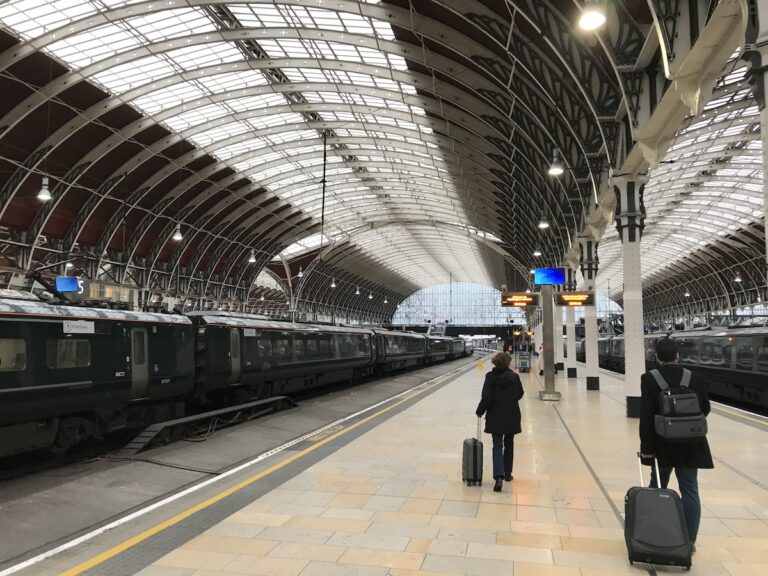
Many major train stations in Europe have been remodeled with improved accessibility. Expect that the main station entrance is level with automatic doors. There will be shops, food stalls and signs and monitors telling you where to go. Large stations will also have accessible bathrooms.
Main train stations are large and require you to cover a lot of ground. You may be required to cover as much ground as you are in some airports. The track for your train is often not announced until 30 minutes prior to departure, which may not be much time depending on how quickly you move. You will also need ample time if making a connection between two trains. Assistance is available in most stations to help move you more quickly to your next destination but do require advanced planning and communication with the train company.
*Remember: When searching train stations/timetables on their official websites, search the city or train station name in the language of that country. For example, with Italy’s rail company, Trenitalia, you will need to search “Roma Termini” for Rome’s main train station. Simply searching “Rome” will not yield results. Read our post about Transportation in Rome.
Getting to/from the Train Station
Most train stations are either in the center of town or just on the edge of town, meaning it is usually quicker to get to train stations than the airports. Depending on location and your mobility level, taking a city bus, metro, or taxi to the train station will allow you to be delivered just outside the station. If taking a metro to the train station, the metro will likely be within the train station, eliminating the need for you to even go outside. You may even be staying close enough to the train station to walk but remember, that this means you should be able to maneuver your luggage without much effort to avoid an injury on your trip.

Trains
Trains will allow you more room to maneuver and stretch out compared to most airplane seats. The aisles will be wide enough to walk without having to sidestep over seated passengers or their belongings. The aisles will still be narrow enough to hold on to the head rests of seats should you need for balance when it gets bumpy. Legroom will also be more plentiful, allowing you to change seated positions and do some stretching. Your large luggage (roller bags) need to be stowed in racks at either end of your train car. Smaller bags can go in the rack above you or in front of your feet.
Bathrooms are large unlike airplane bathrooms. At least one bathroom on the train should be wheelchair accessible. Locations of accessible bathrooms are noted on most train sites when you book a train ticket. When you get to the seat selection page, look around on the seat map to find the accessible bathroom so that you can book a seat nearby if needed.
Newer trains have fully eliminated steps to get on/off the train. Some older trains will have one or two steps but will also have sturdy railing to hold onto. If choosing a double decker style train, you may need to stay on the main level as you will need to climb 6-8 stairs to get up to the upper level.
An important consideration is getting off the train. You will want to make note of how long the train will be stopped at the station you are arriving at. Depending how steady you feel getting to the exit on a moving train, quicker stops may require you to stand near the exit prior to the train stopping. If it is a busy station, new passengers will be getting on the train while you are still trying to get off. It is typically expected that you will be standing near the exit doors prior to the train stopping so that you can make an quick exit. If this does not seem like a reasonable or safe option to you, requesting assistance prior to your trip will be helpful.
European Train Travel Mobility Tips: Book a seat near the door. People will likely line up right next to your seat, eliminating the need for you to be standing when the train stops. Place your large luggage in the racks next to your exit so that you can grab them on the way out. You will, however, need to grab them quickly. If you have smaller luggage, collect it several minutes before you reach your destination and hold it in your lap so then you can get up and go. Again, if these tips do not seem feasible for you, requesting assistance through the train company is likely a good idea.
Exceptions
If your travels include small, regional stations, expect fewer accessibility upgrades. As European rail companies have focused on improving accessibility, they have focused on the most used trains and stations first. This means that if your travels take you to smaller cities/towns, you may need to maneuver stairs and/or there may not be staff there to assist you. Especially in the off hours in the smaller train stations, you may not see any staff there at all. Planning is especially important in these cases! The upsides to a smaller station are that you will not need to walk as far to your train track and there will likely be fewer people to maneuver around at the station and when getting on/off the train.

Train Resources
Below are links to the major train companies in Europe. They are the English language sites unless noted. Where applicable, I have also included links to their accessibility pages and station guides. Use the drop down menu for each country to view the links.
I hope this has been a helpful overview of mobility requirements for European train travel!
Read Related Have Age Will Travel Posts
German Train Travel and Mobility
Mobility Considerations to Discuss when Traveling with Friends and Family
Mobility Considerations for Types of Travel
Google Maps – Travel Mobility Tips and Tricks
Make sure to Pin this Post to Save all the Train Company Links for later or Share with Friends!