
Anatomy of a Tennis Shoe – An Overview
Tennis shoes, sneakers, trainers, kicks, or whatever name you know them by, are typically the best option for a travel shoe. They are not only functional and supportive but now come in endless styles, colors, weights, etc. In this post, we will learn the basic anatomy of a tennis shoe and what to look for. I have also linked additional resources at the end of this post if you want more in depth information. If you want to learn more about how to find the right travel shoes for you and tips about where to buy them, read our Best Shoes for Travel post.
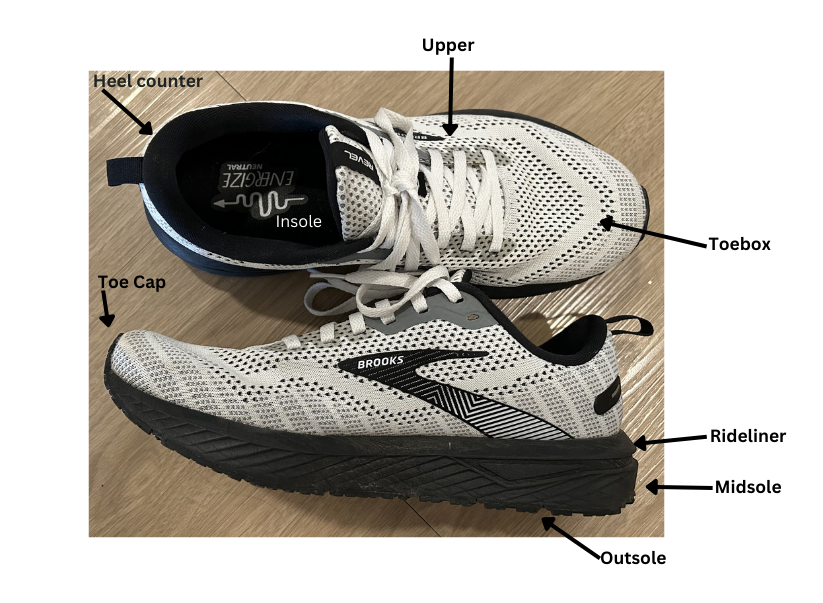
Toe Cap
Let’s start this Anatomy of a Tennis Shoe post at the toes. The toe cap is the very front of the shoe. In most tennis shoes, this cap will be thin as pictured above. If you tend to stub your toes or catch your toes on stair steps or cobbles, having a more substantial/sturdy toe cap or entire toe box may be a good option for you to protect your toes. As a side note, if you do catch your toes frequently, you may want to visit a physical therapist for a balance assessment!
Toe Box
This is the space for your toes. What is most important here is the width of the toe box. As we load onto our foot through to pushing off through our toes, we need space for our toes to splay and to help propel us forward. You should feel that your toes have plenty of wiggle room width-wise to spread out when you are standing or walking. This is especially important if you have bunions or other foot issues. Compressing your toes will only make you feel more uncomfortable and could alter your walking mechanics.
Upper
The upper refers to the top portion of the shoe. As you can see in the photo above, these shoes are mesh. This provides improved breathability and a lighter-weight shoe in general. If you will be traveling in cooler or wet wether, a waterproof shoe may be a better option for you. Keep in mind that waterproof shoes are generally heavier.
Heel Counter
The heel counter provides stability for your heel/rearfoot. It is the back portion of the shoe as shown in the photo. It hugs your heel and keeps your rearfoot from moving. There are different levels of firmness of heel counters. If you overpronate or have a flat feet, you will likely want a more rigid heel counter. Shoes with a more rigid heel counter are called “motion control” shoes. To learn more about heel counters, I recommend this post from Run Repeat. They reference running shoes but most of their information applies to walking shoes as well.
Insole
The insole cushions your feet and provides arch support. Do you have your own orthotics? Make sure the insoles of the shoes you buy are removable. This allows you to add your orthotics or buy an over the counter orthotics for more cushion or support.
Rideliner
These are your shoes’ guardrails. They are fairly rigid and are the widest part of the shoe. If you have orthotics, make sure they fit within this liner.
Midsole
The midsole provides additional cushion and depth for support of your heel. As you can see in the shoes above, the heel is thicker than the front of the shoes. The more built up the heel, the more shock absorption the shoe will provide. Wearing a flatter shoe will provide less absorption. Aside from how heavily you heel strike when you walk, also think about the surfaces you will be walking on. Concrete and stone surfaces will not assist you in supporting your joints but supportive shoes will!
Outsole
The last component in our anatomy of a tennis shoe lesson is the outsole. This is the tread or traction at the bottom of the shoe. Do you slip easily or will you be traveling to a rainy place or place with lots slippery/smooth surfaces such as marble? Selecting a shoe with deeper tread or buying slip resistant shoes can be a good option. The outsole of slip resistant shoes are usually made of rubber, EVA (ethylene vinyl acetate) or polyurethane.
Additional Resources
Do you want to learn more about components of athletic shoes? Here are resources below to learn more!
American Academy of Podiatric Sports Medicine Footwear – Running Shoes
Pin this on Pinterest to save for later or to share with your friends and family!

See Have Age Will Travel’s other Mobility-Related Travel Gear Posts:
PT Approved Travel-Friendly Exercise Equipment