Mobility Considerations for Types of Travel
Traveling Solo, with Friends/Family, on a Guided Tour or a Cruise
There are many places to see and many ways to travel! While we each have unique travel preferences, we should all consider how our physical mobility affects our travel options. In this post, I will discuss mobility considerations for types of travel and provide notable considerations and examples for a variety of mobility requirements. Below we will cover: Solo Travel, Friends/Family Travel, Self-Guided, Guided Private, Group Tours, and Cruises.

Solo Travel
For this category, let’s consider exclusively solo travel – not traveling with friends or family. This is the most unrestricted type of travel, but also requires the most out of you. You are in charge of getting yourself to your destination(s), sites, restaurants, etc. You have unlimited flexibility if you want to change your plans (like deciding to take a last-minute day trip). Also, you have the flexibility to add in rest time without having to worry about inconveniencing others. You get to see exactly what you want to see and do so at your own pace.
From a mobility perspective, if you choose this method of travel, you will need to ensure that you feel safe traveling and staying in a hotel room or rental alone. Also, if you feel unwell, it will be up to you to get yourself to the pharmacy, urgent care, etc unless you are in a hotel with a concierge.
Walking
You determine the walking distance. You get to chose how much you want to walk, when to rest, and when to change to a taxi or public transportation. Consideration for someone else’s mobility or activity goals will not be applicable. If you realize you are pushing too hard, you can slow your pace or and alter your itinerary easily.
Transportation
It is up to you to get to your destination and all places in between. You must manage getting through airports, into and out of taxis, metros, public buses, and trains independently.
Luggage
When traveling solo, you are the solo mover of your luggage! Packing light is very important when you choose this type of travel. You can significantly decrease the amount of times you will need to haul your luggage by using private transport and staying at a hotel with porter service. I strongly recommend that you are able to walk at least one block with your luggage without it causing you discomfort. Practice this before you leave home. If you cannot, make an effort to bring fewer items with you. In the event that you have to walk a block to meet a taxi or have to walk out of baggage claim to an area where transport is waiting, you will be happy you can manage that luggage.

Travel with Friends/Family
Between the freedom of solo travel and the convenience of group travel lands us at traveling with friends and/or family. Ideally, you share similar expectations for travel and perhaps have even taken a successful previous trip together. While there are many mobility tips for planning the perfect trip with others, the most important is for everyone to be honest about their physical abilities. See our post on what to discuss with your travel partner(s) in terms of mobility when you are planning your trip.
Walking
You may want to walk six miles a day but your friend feels like three miles will be their max. Have you talked through how to bridge the gap? Will you see things that they will not? Will they take a taxi to a location while you walk? Do you think having to change your travel style to reduce walking will decrease your enjoyment of the trip?
Transportation
Those with a larger budget or physical needs for more legroom/seat recline may be opting for premium economy or business class while others in the group seek to keep costs down by flying in economy. If this is the case, make sure the group is OK with sitting apart on flights. I strongly recommend buying as much space on the plane as you can afford.
On United Airlines for example, the average economy seat width is 17.3 inches with 31 inches of legroom (pitch). While in premium economy (called Premium Plus), seat width is 19 inches and it offers a pitch of 38 inches. These considerations also apply to train travel. Most long-haul and express trains in Europe have first- and second-class cars. Luckily, second-class tends to have more legroom than an economy plane seat. First-class cars will likely offer additional legroom and more comfortable seating.
Luggage
Unless you are staying in hotels with porter service and have a private driver from the airport to the hotel, you will be hauling your bags. It is important to make a rule with your travel companions: everyone carries their own luggage. If a friend brings too many pieces of luggage or packs a bag heavier than they can carry, it is not your responsibility to help! I know someone that ended up having to have surgery due to helping carry their travel partner’s luggage in addition to their own. Please do not let this be you. To avoid possible injuries, I emphasize that you speak to those you are traveling with about this before you book a trip (and revisit it again a couple weeks before the trip).
A Quick Note about Self-Guided Tours:
This is where a company makes your itinerary and books your lodging (and sometimes transportation). You, however, are then on your own for following the plan. This could be an option for a solo traveler who does not want to do all the planning themselves. It provides you with a contact person (sometimes even in-country) that is available should help be required. Note that there may be other travelers signed up for the same dates meaning you will end up seeing them at the same hotels/buses, etc. This can be a plus if you want to trade stories or advice, but could start to feel like an unintended group tour if you are seeking to avoid that.
Self-guided tours are also a good choice for two to six people traveling together – the tour company makes the hard planning decisions for you and you will have someone to blame rather than each other. A travel agent would do similar planning/itinerary planning for you but may not have a local contact for you to reach out to if needed.

Private Guided Trips
At the highest price point is the private guided trip. If it is in your budget, it ticks all the boxes for many travelers. This option allows you to design the tour with your guide based on your and your travel companions’ mobility. Your guide can also alter plans during the trip. A small group led by a knowledgeable guide means that you will get experiences that a large group or solo traveler will not.
Walking
Providing your guide with your preferences and mobility level will help them determine which parts of the itinerary are worth walking and which are better with an alternative mode of transportation. Essentially, they will be able to maximize the quality of the physical parts of your trip. During the tour, they will also be able to pivot and get you off your feet with minimal disruption if needed.
Transportation
Often times, private transportation is included in this type of trip. This will greatly reduce your daily steps, especially for rural stops. Where transportation is provided, you may just need to get out of the car and then back in. Stopping in a rural area without private transportation often means much more walking and multiple modes of transportation to get there.
Luggage
Private tours usually provide luggage service and private transportation to the airport and in between destinations. Make sure to look carefully to ensure this is the case. If unsure, contact the company to see if luggage service is provided or if they can make it available for you prior to booking. If you do not want to lift your bags at all, you will need to confirm and make sure you have it in writing.

Guided Group Tours
This is a seemingly endless category with many options/prices/group sizes/etc. Because there are so many options, I will get into specifics in a dedicated post in the future. Group size will determine several of the factors I have listed below. The larger the group, the less you are likely to pay but it may affect things such as ability to hear and see your guide, the walking pace of the group being too fast or too slow, inability to visit some attractions due to group size, etc.
Walking
Activity level requirements are the most important consideration for this type of travel. You will want to make sure you are able to do what is required of you daily for your guided tour – and that you can do so multiple days in a row! Your fellow travelers will be grateful that you are able to keep up with the group. Activity level requirements should also be considered by those without mobility concerns who enjoy having active trips. If you are booking a spot on a guided tour and the daily activity requirements are “Low” without options to add additional activity, you may wish you signed up a more active tour. If a tour’s activity requirements are vague or you have specific questions, call the tour company for more details.
Transportation
Especially with larger groups, you will likely be using a charter bus to move around. Smaller groups may use public transportation or private vans/shuttles. This will cut down on your activity requirements. It will be important to ensure you can get on/off the bus, climbing up/down the steps comfortably, especially after sitting for multiple hours on the bus.
Luggage
Some guided tours will expect you to move your luggage – including hauling it down stairs in hotels, loading it into and out of the bus/train, etc. Others will require you get your bag to and from the hotel lobby, but will load it into transportation for you. More expensive tours will do all the lifting for you, including luggage being delivered directly to your hotel (maybe even your room). Make sure you know what will be required of you.

Cruises
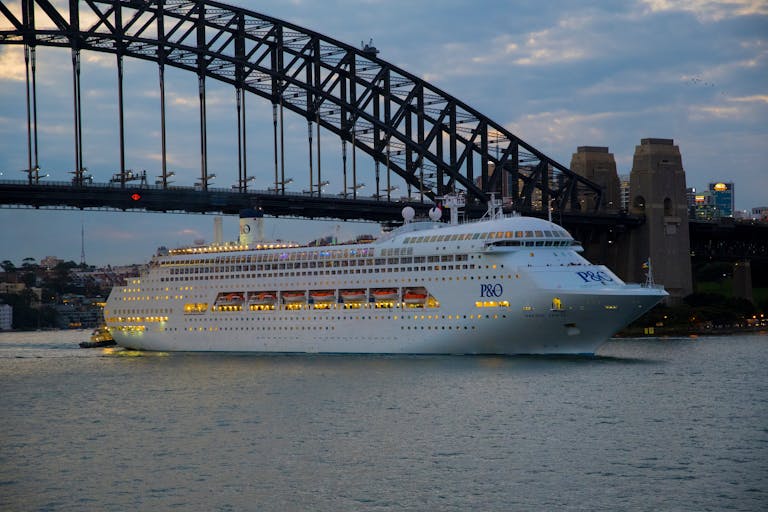
The last type of travel to consider based on your mobility is cruising. Cruises mix features of guided group tours with the ability to add solo/friends/family travel as desired. Like guided group tours, cruises have a huge range of price and ship size. Nowadays, ships will have elevator/escalator options, level flooring, accessible cabins (book early), and plenty of space to move. Make sure you know how accessible the ship is. ADA compliance only is required for cruise ships that stay in American waters.
A cruise can be a good option for traveling with friends/family with different mobility levels and interests. You can all do different activities during the day, while still meeting for breakfast and dinner to start and end each day. See our post Cruising with Mobility Considerations in 2025.
Walking
When looking at cruising options, you will want to find out how far you need to walk to get onboard and distances between your cabin, food services and other amenities. A cruise will allow you to pace yourself day to day. You can take a rest day here or there without having to change your entire itinerary. If you walked too much the day prior, you would not be inconveniencing anyone if you stayed on the ship the next day.
Transportation
Here is one of the biggest pros of cruising. While you rest and sleep, the ship is moving you to your next location. Getting yourself to and from the cruise port and then back to the ship each day will likely be your only major transportation considerations aside from the day’s excursion. Some destinations require tenders (small boats to ferry you between the ship and the shore). You need to make sure you are able to and feel comfortable getting on and off these in order to explore the destination.
Luggage
Importantly, when you cruise you only have to unpack once. This will sound very appealing to those whose backs or shoulders do not enjoy the frequent lifting of luggage with each change in location.
There we have it! I hope a brief overview of mobility considerations for types of travel is helpful in your planning!
Read Related Have Age Will Travel Posts
How is my Mobility for Travel?
Mobility Considerations to Discuss when Traveling with Friends and Family
5 Ways to Reduce your Time Standing While Traveling
Google Maps – Travel Mobility Tips and Tricks
Mobility-Related Questions to Ask BEFORE you Book your Lodging