Slow Travel on the Island of Föhr
If you are searching for a place to get a glimpse of local culture while being able to take it slow and relax? Consider traveling to the Island of Föhr. If you want some convincing about visiting places less traveled, see our post, The Benefits of Traveling to Less-Touristy Places. I recently took a trip to Germany with my parents and one of our stops was the island of Föhr. Read about our trip in this post: Two Days Visiting Föhr.
History of Föhr
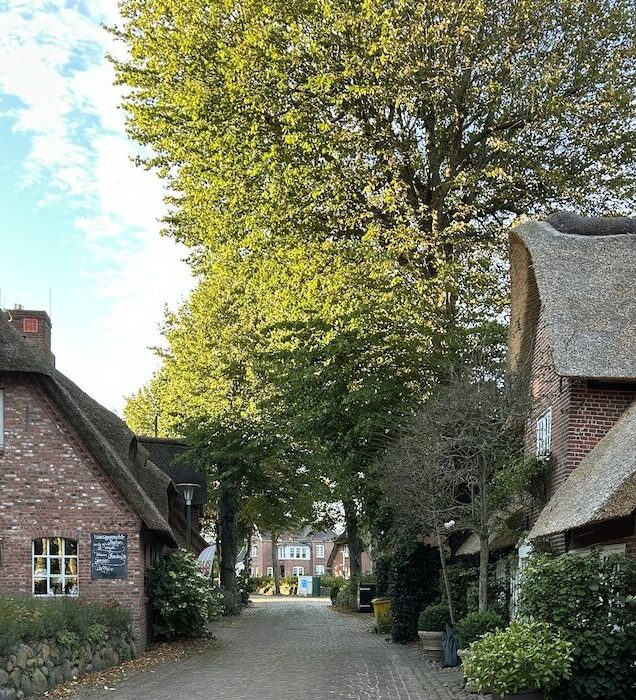
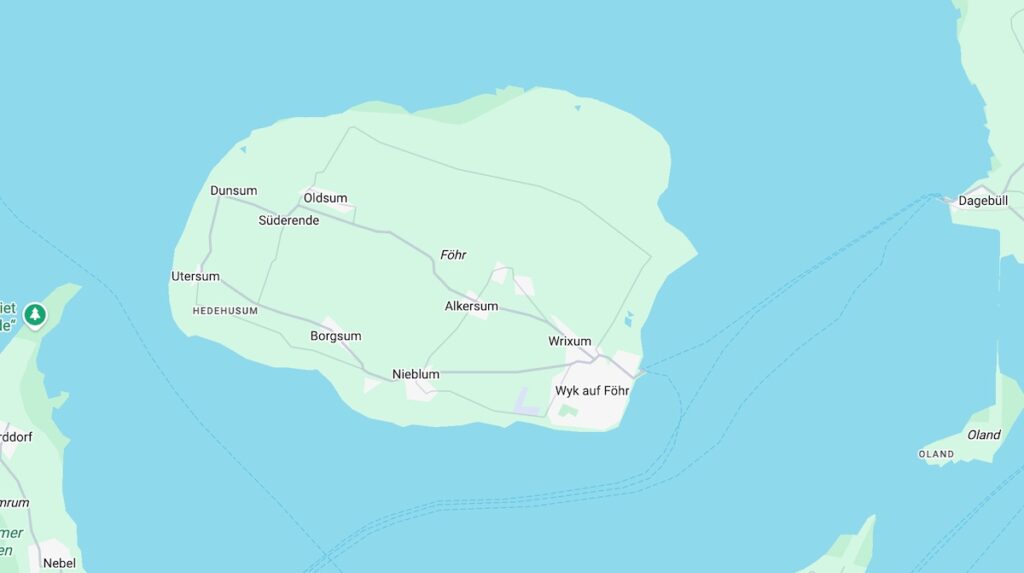
Föhr is part of the Friesian Islands in the North Sea, just south of the border with Denmark. Other islands include Sylt and Amrum. Föhr is small, about 7.5 miles by 4.2 miles. The main town of Föhr is Wyk. Here you will find services, hotels, spas, restaurants and shops. There are several villages, including Nieblum, where most of the ship captains lived and built large homes still present today, Alkersum, and Oldsum. Popular beaches are on the south, east and west of the island.
Habitation of Föhr dates back to the 7th century. The 17th and 18th centuries were a time of prosperous seafaring business on the island, mostly whaling. Most of the grand homes you see today on Föhr are from the 18th and 19th century or are newer and fashioned after that time period. The Friesian islands went back and forth between German and Danish control over the centuries. It became a vacation island in the mid 19th century. There were as many as 6,000 residents of Föhr in the 18th century and it has about 8,000 full-time residents today.

Getting To and Around the Island of Föhr
Getting to Föhr
Reaching Föhr takes some time but does get you into the mood of slow travel and not being in a hurry. For most, you will take the train to Dagebüll. Once at Dagebüll, you walk about a few hundred feet to the ferry dock and take the 50 minute crossing to Föhr. The train requires stepping up and down from the train car. A ramp from the train platform down to the ferry area is present. There is a ramped walkway up to the passenger level of the ferry. There is a couple inch-high lip to step over to enter the ferry but an elevator is also available. Toilets, hot food and drinks are available on the ferry. The ferry to Föhr then also stops in Anrum to the west. You can find the official website for the ferry system here.
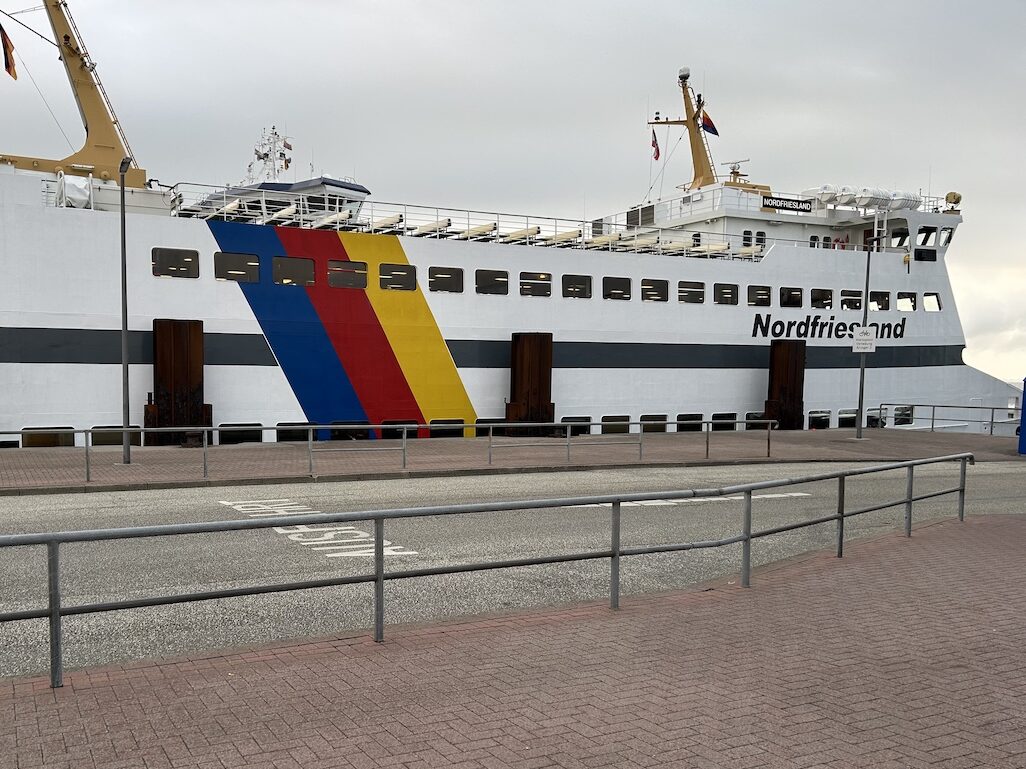
You can take a car onto the ferry or can walk on as we did. If you do choose to rent a car to take on the ferry, you will need to book ahead. There are a couple car rental companies in Niebüll, which is about 8 miles away from the ferry dock in Dagebüll. You can train to Niebüll (the stop before the Dagebüll stop) and rent a car. You can also rent a car on the island. There are few cars available so this also needs to be booked ahead of time. To learn more about traveling in Germany by train and mobility requirements, see our post: German Train Travel and Mobility.
Note: There is also a small airport on the island but is used by private flights, usually from Sylt or Hamburg.
If you are looking for an unusual way to get to an island, this is how you can travel by car to the nearby island of Sylt:
Getting around Föhr
If you are staying outside of Wyk in another part of Föhr, I would recommend you have a car. You can rely on the taxis but book ahead or be prepared to wait as there are only a handful of drivers on the island. We waited about 45 minutes for a taxi from the ferry dock to get to our accommodations. We pre-booked a taxi to take us to the ferry dock at departure. There is a public bus system on Föhr but routes and times are infrequent. The bus also does not cover all of the island. The other option would be to cycle. There are many places you can rent bikes (including e-bikes) and it is a very friendly biking island. There are dedicated bike lanes around Wyk and preferred biking roads throughout the rest of the island.
High Season/Low Season
High season is July and August with shoulder season in May, June, September and October. We were there in early September, after children were back in school. We assumed this would be a slower time but very few lodging options were available by the time we were ready to book in May. Many accommodations have multiple night minimums, even outside of high season. You will find hotels and condo rentals in the town of Wyk. Rental houses, B&Bs, and guest suites in homes are plentiful around the island.

Terrain of Föhr
Föhr is flat. You will not need to worry about walking up or downhill. The highest point on the island is about 43ft above sea level. The town of Wyk is also flat and you will not need to maneuver stairs to get around town. The pier in Wyk is accessible and offers great views looking back onto the island as well as the ocean with lots of different seating available. Cobblestones are present in the small villages that have preserved their look of the 1800s. While seeing the island, you will see beaches, lots of corn and other crop fields, open grassy areas, and marshes. Cows are plentiful on the island.

What to Do
Föhr is largely a vacation island for Germans. Taking it slow is a focus on the island. Even if you are not interested in the spa offerings, there is plenty to do. Much time can be spent in cafes, strolling through the villages, visiting a museum or church or two, watching the ocean while sitting in one of the Strandkörbe (beach baskets), walking, or cycling. Bird and seal watching and walking on the mudflats are also options. The weather can change quickly from sun, to wind, to rain. Wyk also has shopping, multiple ice cream shops, and a variety of restaurant cuisines. Each village has at least a cafe or restaurant or two. Check their opening days and times, especially if not visiting in high season.

Many accommodations require multiple night stays and you would not want to take all that effort to stay for just one or two nights anyway. I would recommend staying on the island for at least 3 days. I say this to help find lodging, but also because there are many villages to see, it takes time to get around, and the weather is variable. If you plan to visit in July or August, you may need to plan on staying a week depending on lodging minimums.

Foehr.de is the official tourism website of Föhr. You will need to use your internet browser’s translation feature to translate it from German.

If you are looking for a peaceful vacation in Northern Europe, consider Föhr for the ambience, the slow pace and ability to wander at your own pace.
Looking for more Location-Specific Posts?
Paris: Mobility Requirements Overview
Vienna and your Mobility – An Overview
Mobility Requirements for Visiting London: An Overview
Pin this Slow Travel on the Island of Föhr Post to Share or Save for Later!