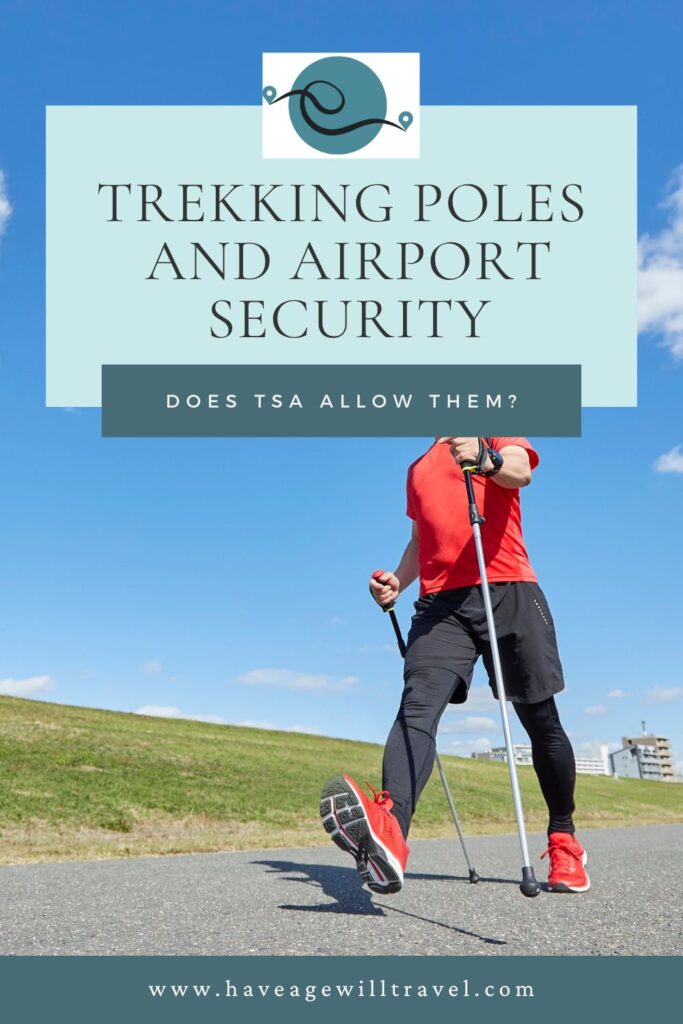
Trekking Poles and TSA Airport Security
What I Learned when I Called TSA
Trekking poles/hiking poles are now being used for more than just hiking. Increasing numbers of older adults are using trekking poles instead of other assistive devices/mobility devices. They are often steadier than a single cane and look less “medical” and more “sporty” than other assistive devices. A question that is often asked is whether or not trekking poles are allowed through TSA (Transportation Security Administration) in the United States. Where the confusion lies is using trekking poles for mobility. If someone uses trekking poles as they would a cane or a walker, are they considered a mobility device? Would they then be allowed through the TSA checkpoint? Are they allowed in your carry-on luggage?

I continued finding conflicting evidence online about using them as a mobility aid. A couple patients of mine have had success while others have been turned down. The latter had to either toss out their trekking poles or scramble back to the check-in counter to have them checked.
As I continue to be asked this question, I decided to find out myself. I sent TSA an email. The reply was mostly a copy/paste of information from the TSA website. I replied to the email with further questions and received a response to call in with a corresponding code that expired within 24 hours. I called and here is what I learned.
Note on Terminology: Trekking poles and hiking poles are the two most common terms for carbon fiber walking sticks. In this post, I refer to them as trekking poles. Also, I will use the terms assistive devices and mobility aids in this post, referring to canes, walkers, etc. In the medical field, we refer to them as assistive devices while TSA refers to them as mobility aids.
Can you bring Trekking Poles through Airport Security for your Hiking Trip?
NO – they are on the TSA prohibited items list. They must be in your checked baggage. TSA is clear on this but are less clear about if you use them for mobility and not for recreation.

Can you bring Trekking Poles through TSA Security as an Assistive Device?
The official answer is NO. During my discussion with the TSA representative, we discussed how trekking poles are being used as mobility devices. The main sticking point here is that TSA does not regard them as a mobility device. Hiking poles are listed under “Sporting and Hobby Equipment”. They noted that mobility items are allowed unless it is a prohibited item. Trekking poles are considered a prohibited item in carry-on bags, therefore they will not be allowed through the security check-point. Here is a portion of the email I received from TSA before I spoke with them on the phone:

I also asked if it would help if someone had a note from their medical provider about trekking poles being their mobility aid. The answer is NO. Patients have also told me their trekking poles were turned down because the end of the pole was sharp and not rubber. I inquired if that made a difference and that answer to that is also NO.
Transiting with Trekking Poles though another Country
It is also important to consider trekking poles when you are transiting through another country. If you have a connecting flight and go through security again internationally, they may not allow trekking poles. The EU does not have a definitive “yes” or “no” answer for trekking poles on their website. It does say that blunt instruments, like several in the TSA sporting equipment section, are not allowed. I have included this EU link for hand and checked baggage.
It is also important to consider this if you are transiting in the United States from another country. You have to collect your bags at your first U.S stop and then go through security before boarding your next plane (in most cases). If you were able to bring trekking poles through your origin airport, you will likely need to then put them in your checked baggage when you collect them to connect in the United States.

What to Bring Instead
The TSA approved list of assistive devices include: canes, walker, crutches, wheelchairs. If you are accustomed to using trekking poles for mobility, discuss alternatives with your primary care provider, neurologist or physical therapist. One option may be to trial two canes instead.
If you are set on using trekking poles and do not want to bring another assistive device on a trip, consider putting your trekking poles in your checked luggage and signing up for wheelchair transport through the airport. You could then gather your trekking poles at baggage claim and use them for the remainder of your trip.
Discussions with your healthcare provider and/or your travel companion will be helpful in making your decision. Remember why you are using an assistive device in the first place. You use it to prevent falls and to make getting around easier. Do not settle for a lesser assistive device and “hope” it will be what you need. Take plenty of time with a new assisted device so that it is easy to use, especially when considering jet lag!
The Key Takeaway from this Post:
Even though you may use trekking poles as an assistive device, TSA recognizes them as sporting equipment and not a mobility aid.
They did mention, the final answer lies with the individual TSA agent. You may encounter an agent that waves you through the security check-point with trekking poles when they see you are using them for mobility. If you are denied however, the consequence of having to go back and check them or leave them at the airport is certainly inconvenient.
Other Have Age Will Travel Posts You may Find Helpful
Google Maps – Travel Mobility Tips and Tricks
Mobility Considerations to Discuss when Traveling with Friends or Family
The ETA and ETIAS: Europe’s New 2025 Travel Requirements
All About Robotic (Autonomous) Airport Wheelchairs
PIN this Post to Share with Others or to Save for Later!