Vienna – Transportation and your Mobility
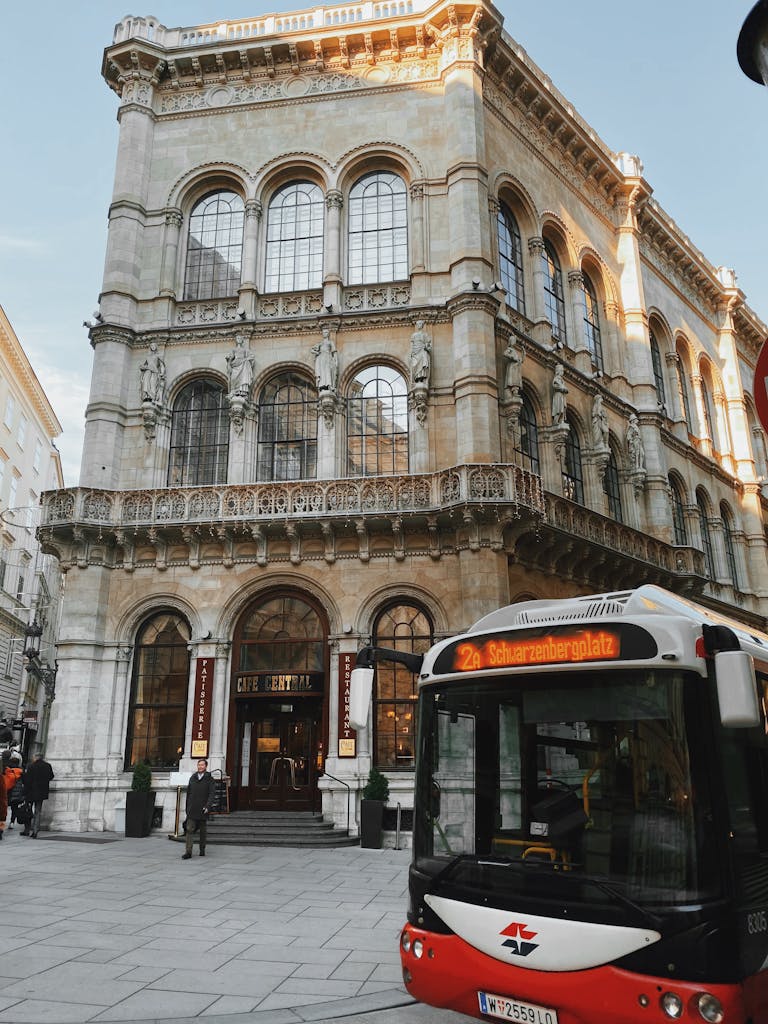
Getting around Vienna is efficient thanks to it’s public transportation system. Vienna has a robust public transportation system that is mostly barrier-free. Between walking or wheeling and using public transit, you will be able to see all this beautiful city has to offer. Taxis and Ubers are also available but trams, the underground (metro) and buses are plentiful. Read below for how to best get around the city based on your mobility needs. Visit the links provided for more transportation information from the official transportation providers.
Getting to/from the Airport:
The Vienna Airport (VIE), Flughafen Wien, is about 12 miles southeast of the city center. You can get to/from the airport via public transportation, taxi or rental car.
Taxis and Uber
Taxis can drop you off directly in front of your departure terminal. Taxi ranks are available directly outside each terminal with the largest being in front of terminal 3. Expect to pay about €60-65 each way to travel between the airport and the city center. Per Vienna’s official tourist website, two taxi companies offer a €42 flat rate from a Vienna address direct to the airport (scroll down to “Airport Taxi”). You must specify an airport taxi when booking. There are multiple pickup services you can pre-book and Ubers are also available.
Rail
The City Airport Train (CAT) is a direct train between the Vienna Airport and Wien Mitte/Vienna Central Station. This is a 16 minute non-stop train. The cost is €14.90 one way and €24.90 round-trip as of January 2025. They run daily every 30 minutes from about 6am to 11pm. The Vienna Central Station is just outside of the Ringstraße to the east. It connects with trams and the underground into the center or is about a 12 minute walk from Stephansplatz. Both the Wien Mitte/Central Station and airport station are barrier-free.
There is also an option with participating airlines to check your bags at the CAT Central Station and your bags will be taken all the way onto the plane for you. For those of you who have difficulty managing your bags on public transportation or want to have a lighter journey, read the details on the CAT website.
The Schnellbahn S7 will get you from Wien Mitte (same location as the CAT) to the airport in 25 minutes. A Railjet train can take you from the Vienna main train station (Wien Hauptbahnhof) in 15 minutes. Both of these options run every 30 minutes and cost €4.10 each way. For more detail and for additional rail transportation options, see the link below.
Buses
Buses, run by Vienna Airport Lines, run about every 30 minutes from four points in the city, including Schwedenplatz in the Innere Stadt near the canal. Fares are €10.50 one way and €17.50 roundtrip. If you have the Vienna City Card, fares are €9.50 and €16.50. You can buy tickets ahead of time online, from ticket machines at the airport or from the driver. The buses can accommodate wheelchairs and walkers with designated seating. Buses drop off across the street from the terminal at the arrival (lower) level of the airport.
Links for Getting to/from the Airport
Vienna Airport’s Official Website for getting to/from the airport.
Vienna’s Tourist Information Website’s page on getting to/from the airport: I found that Vienna’s tourist information website has a more comprehensive and easier to follow overview of your options to/from the airport than the airport’s website.
City Airport Train’s Official Website
Vienna Airport Line’s Official Website for bus transportation to/from the airport.

Getting to/from the Main Train Station
The main train station in Vienna is the Hauptbahnhof. There are other train stations you may utilize to reach or depart from Vienna including the Westbahnhof. Westbahnhof is used now almost exclusively for Westbahn trains to Salzburg and regional ÖBB trains. When booking trains into or out of Vienna, pay particular attention to which train station you will be using. For example, I arrived from Upper Austria via the Hauptbahnhof but departed to Salzburg from Westbahnhof.
The Hauptbahnhof is accessible with a barrier-free entrance. Elevators, escalators and stairs are available between different floors of the stations and to all platforms. See our Mobility Guide for European Train Travel post to learn more about mobility assistance in European train stations
The underground (U1) and trams 1, 8 and D connect you to the center of Vienna in 5-10 minutes. You can also take a taxi or Uber located outside the station – look for signs. The main taxi rank is outside the Sonnwendgasse entrance.
Links for Getting to/from the Train Station
Man in Seat 61: covers all you need to know about Vienna’s main train stations.

Public Transportation within Vienna
Sightseeing in Vienna is well covered by public transportation. The underground (metro) gets you around the quickest but utilizing the trams and buses will allow you to see the town while getting to/from your destination.
Unlike many large European cities, Vienna’s transportation network is on the honor system. If questioned, you must show your ticket and it must be validated. When using a single journey ticket, these must be validated on your phone or at a machine at the stop if using a paper ticket. If using a multi-day pass, you will be asked when purchasing when you want validity to start. You do not need to do any further validation after that. For the underground, you will see blue validation machines at entrances to the stations for validation. On trams and buses, the machines will be on board.
Note: During my visit to Vienna, I purchased a weekly transit pass online for €19.70. I entered the dates of use when purchasing. Tickets are emailed to you as a PDF or you can be downloaded on the WienMobil app as a QR code. After that, I used all types of public transportation without having to get out my phone or wallet each time to validate.
A one way ticket is €2.40 for an 80 minute window (€1.50 for seniors) in one direction to use on the underground, trams or buses. A day pass is €8. There are no senior prices for multi-trip or multi-day passes. You can buy tickets online to use on your phone, at ticket machines at metro stops or at tobacconists. If using the Vienna City Pass, these modes of transportation are all covered with the pass.

The Underground
The underground is fully accessible with ramps and elevators for all stops. Above ground, accessible entrances are indicated with a wheelchair icon. Some of the underground lines have trains with completely level entrance/exits. There is a small gap between the platform and some of the older trains.

Trams
Vienna has 28 tram lines to help get you around the city. Sometimes the tram is more convenient than the underground but the big plus is you can see the city while you are transiting. As you can see from the picture, not all tram stops provide a barrier-free entrance to the tram. Per Vienna’s tourist website, 90% of trams have “low floor” entrances. At the tram stop, the electronic signage will indicate when the next accessible tram departs via a wheelchair icon.
Buses
All buses are “low floor” meaning no stairs to step up onto the bus like charter buses. Ramps are available at the front of the bus if needed. They do note on the website that if using a power wheelchair, the device, the user and their luggage cannot cannot exceed 350kg or 770lbs.
Walking
As most of the city is flat, it makes Vienna one of the easier great European cities to get around by foot or on wheels. In conjunction with public transport, you can walk as much or as little as you want as there is likely an underground/tram/bus stop nearby. There are sidewalks and curb cuts, car-free zones and the majority of sidewalks are concrete, asphalt, smooth cobblestones or large pavers. To learn more about this, visit our Vienna Terrain post.

Taxis/Ubers
There are many taxi companies and taxi stands throughout the city. The tourist office has this list of taxi companies as well as a map of all official taxi stands in the city. There is also a feature on this map that shows you locations of elevators associated with public transit (mostly underground stations) to help you in planning your route.
Ubers are available in the city via the Uber app. We used one coming back from dinner at a Heuriger on the outskirts of the town.
Rental Cars
Rental cars are available at the airport and several parts of town. There are also parking lots/garages near major tourist sites outside the city center. Between the comprehensive and accessible public transportation and the wide availability of taxis and Ubers, I think there are far more downsides to renting a car.
Public Transportation and Taxi Links
Vienna’s Tourist Information Website Page about accessible public transportation: This covers all modes and provides helpful resources and links to additional services.
Real-time Status of Elevators for the Underground and any planned maintenance.
PDF Map of Vienna’s underground, tram and central airport train routes
Links to other Vienna Posts
Vienna and your Mobility – an Overview
Vienna’s Terrain and your Mobility
Accessibility of Vienna’s Top Sites
Pin Transportation in Vienna to Save for later or to Share!