Vienna’s Terrain and your Mobility
Vienna is a pedestrian-friendly city not only due to ample sidewalks and car-free streets. Vienna’s terrain is also flat. The center of the city, the Innere Stadt or central district, is enveloped by the Ringstraße or ring road. The Ringstraße was constructed in the late 19th century after the Medieval walls of the city were demolished to incorporate the center with the wider area of Vienna. Some sights such as the Belvedere Museum and Kunsthistorisches Museum are outside of this ring but the majority of the top tourist sights located within. The city center is also a UNESCO World Heritage site. In this post, we will cover Vienna’s terrain so that you can decide how accessible the city is for you and your mobility!

Ground Surfaces
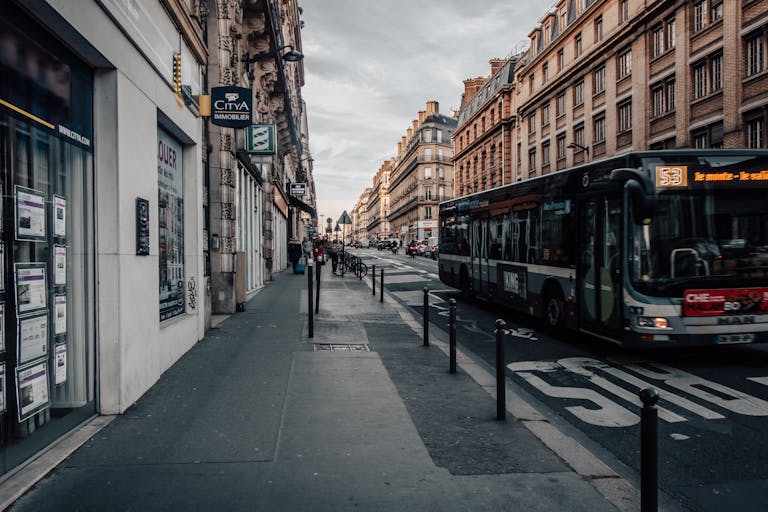
Within the city, you will be walking mostly on pavement of concrete and asphalt. Sidewalks border both sides of most streets. Small side streets may be small cobblestones with no distinction between where cars and pedestrians go. Most streets in the center are one lane of car traffic, room for parked cars and slightly elevated sidewalk (about 2 inches) on either side. Curb cuts are understated and the sidewalk gradually slopes down to street level.
When you reach larger streets like the Ringstraße, you will see bike lanes on the road or designated cycling space on the sidewalks. On the Ringstraße, you will see two icons next to each other on the pavement, one pedestrian and one cyclist indicating what side of the the sidewalk you should be on. At large intersections, you will also see the cyclist icon painted on green or red pavement. Sidewalks without color are meant for those not on wheels.

Traffic-Free Streets
Kärntner Straße
This is a traffic-free street about one third of a mile in length. It takes you from Stephansplatz to the opera house, Wiener Staatsoper. You will stroll by numerous shops and cafes. You will traverse over large, smooth pavers rather than cobblestones on smaller streets.
Kohlmarkt Straße
This street is just off the west side of Stephansplatz. It is a traffic-free shopping street about three blocks long. It leads you directly down to the Hofburg Palace complex where you will find the palace, the Imperial Treasury Museum, the Sisi Museum, and more.

Squares and Parks
Stephansplatz
The most popular square in the city is the center of town. Saint Stephan’s Cathedral (Domkirche St. Stephan) as well as a major metro stop (Stephansplatz) is located here amongst other tourist sights. The area is completely flat and you will be walking over large pavers. It is a busy, bustling place so make sure to pick a very specific meeting spot if you and your travel companion(s) decide to split up and wander. You can watch this YouTube video from Enthusiast Walking Tours of this square.
Prater
The Prater is an a former imperial hunting area and was given to the residents of Vienna for leisure by Emperor Joseph II in 1766. Today, it is made up of two parts: an amusement park and a green park. The main avenue of the green portion of the park is almost three miles long and smaller walking paths are along either side lined by trees. There are also restaurants, beer gardens and accessible restrooms. Entry to both parts of the Prater is free and is flat and paved with asphalt. The closest metro stop is Praterstern which is across the street from the entrance to the amusement park portion. If you would like to enjoy the green portion of the park only, there are bus stops and and spots for taxis to drop you in multiple places. Tram 1 also stops in the green portion of the park.
Stadt Park
This was Vienna’s first public park. The Stadt Park (city park) was constructed in 1862 after the Medieval walls along the Ringstraße were demolished. It has many sculptures and monuments, including one to composer Johann Strauss. In contrast to the Prater, this park has manicured garden areas and places to sit and ponder. It is flat and paved. Trams 1, 2 and D stop here as well as the U4 metro.
Volkspark
The Volkspark (people’s park) is part of the Hofburg Palace complex and is within the Ringstraße. It is manicured and is known for its rose garden and replica of the Hephaistos Temple in Athens. Its walkways are paved and flat and are lined with benches.
I hope learning about the Vienna’s terrain will help you plan your trip based on your mobility needs!
Links to other Vienna Posts
Vienna and your Mobility – an Overview
Accessibility of Vienna’s Top Sites
Vienna – Transportation and your Mobility
PIN this Post to Save for later or to Share!