London Transportation and your Mobility
Are you planning a trip to London and wonder how easy it is to get around? No matter your mobility level, transportation options in London will provide you with choices. In this post, we will cover your transportations options to/from the airports, the major train stations and within the city between the The Underground (London’s metro), buses, and taxis. While this is not an exhaustive list, these are the most efficient, convenient, and likely ways you will be getting around the city. I have provided links throughout this post to provide you with more information. All links are directly to the transportation companies’ official websites.
Getting to/from the Airport
There are three major airports in the greater London area. London Heathrow (LHR) is the busiest airport in Europe and is in the top 10 of the busiest airports in the world in terms of number of passengers/year. London Gatwick (LGW) and London City Airport (LCY) are the other two major airports. LCY largely offers flights within Great Britain and the rest of Europe while LGW also offers flights to other continents.
Heathrow (LHR)
LHR is about 15 miles west of the center of London. It has 5 terminals, connected by buses, long walkways and trams. Its size alone can be intimidating but it offers many transportation options for your to chose from based on your mobility level. All buses offer ramps and seating and the trams have seating and a small gap between the tram car and the platform.

The Underground/Rail
The Piccadilly metro line stops at London Heathrow and takes 48 minutes from the Piccadilly Circus stop. The Elizabeth line will take about 30 minutes. The Heathrow Express is a dedicated line from Paddington station to LHR (terminals 2 and 3) in 15 minutes. The quicker the trip, the more costly the ticket. All three of these options are accessible but you will need to confirm if your tube stop has an accessible entrance if needed. See more about this in “The Underground” section below.
Bus
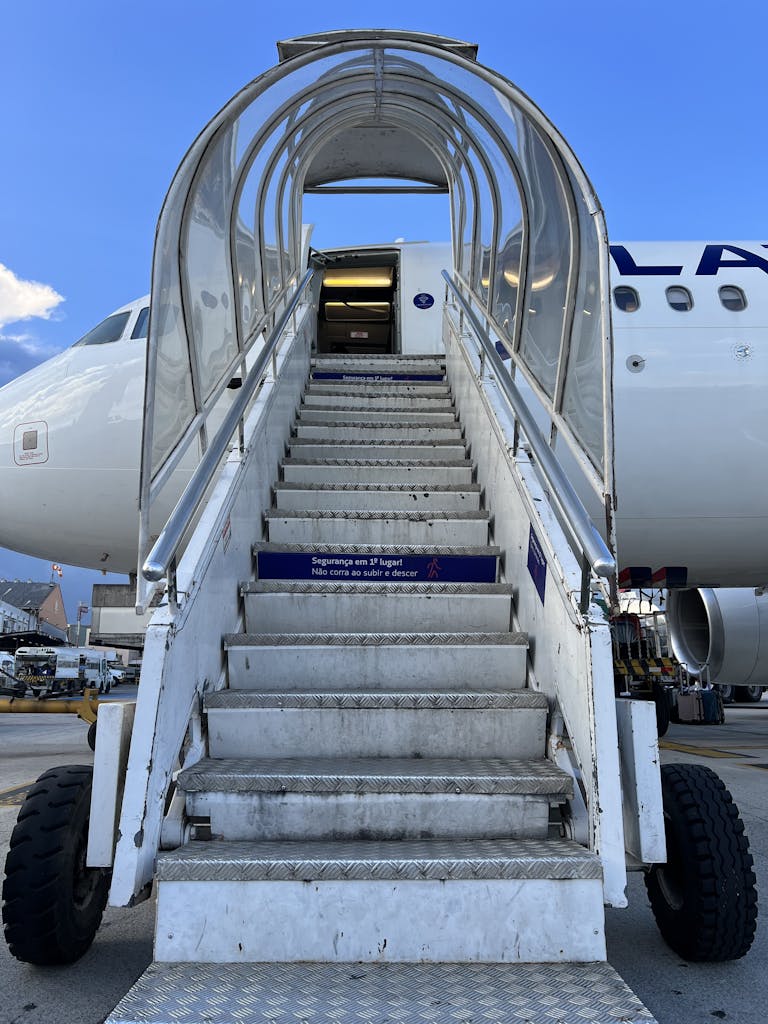
You have an option of public buses from central London to Heathrow or private coaches. Most public buses offer barrier-free entry/exit. If using a private coach, you will need to climb 4 stairs up with a sturdy rail. I have used National Express and found them to be efficient and friendly. The coach drivers will assist with luggage under the coach. Plan for an 60-75 minutes between the airport and central London via bus. You can explore other private coach companies through this LHR link.
Taxi
London Black Taxis have ranks in front of each terminal. You can also arrange fixed price, reserved transportation with other companies. More information is on this LHR Taxis and Minicab page.
Ubers can drop off in front of each terminal. For pick-up, you will need to go to the designated short parking areas for each terminal. More information is located in this Uber link.
Gatwick (LGW)
LGW is about 25 miles south of central London. LGW has two terminals: north and south.
The Underground/Rail
The Gatwick Express train is the quickest way to get between central London and LGW. It takes 30 minutes from Victoria station. The Southern line stops in central London and other southern stop and takes 33 minutes from Victoria station. Also, the Thameslink can bring you from central London to the airport in about 40 minutes depending on the stop.
Bus
National Express runs a bus from Victoria Station to LGW and budgets 90 minutes for the trip.
Taxi
You can hire a taxi for transportation between London and Gatwick but plan for about 2 hours depending on time of day. LGW has a contract with Airport Cars and they offer a fixed rate when you pre-book like with other companies. Other taxi companies can pick-up/drop-off but there is an additional £6 fee compared to with Airport Cars.
Uber can drop off/pick up at LGW. They can drop you off at your terminal and pick you up in the garage parking areas of the north and south terminals. More information is at this Uber LGW page.
London City (LCY)
LCY is about 8 miles directly east on the Thames river from the center of London.
The Underground/Rail
Taking the tube to LCY from the center of London will take about 35-45 minutes. It requires taking a tube line and then connecting with the Docklands Light Railway (DLR) which serves LCY. The DLR runs every 4-10 minutes. If you take the Elizabeth Line, you can arrive at LCY within 30 minutes, though you still need to switch to the DLR.
Bus
Taking two public buses would be required to get from central London to LCY.
Taxi
There is a taxi rank outside the terminal. There is no set fare into the center of London but they give a price estimate of £68-114. All London Black Taxis are wheelchair accessible or would have room for a walker.
Uber picks up and drops off at LCY. See Uber’s LCY page for more information.

London’s Main Train Stations
According to London’s official tourism website, there are 10 major train stations in London. We will cover the four you will most likely use as a tourist. For more information, I have linked the networkrail.co station-specific sites to each below, see “More Information”. They include specific accessibility information as well as a pdf map of each station for your planning.
King’s Cross
King’s Cross station is accessible. It has a step-free entrance/exits. Tracks (platforms) 1-10 are all on the same level as the main concourse. There are escalators and elevators to all other platforms. Accessible bathrooms are available. Bus routes stop nearby. King’s Cross is connected with the St. Pancras tube station. Lines Circle, Hammersmith & City, Metropolitan, Northern (Bank branch), Piccadilly, and Victoria all stop here. More Information.

Paddington
All of Paddington station is step-free. All platforms are on the same level as the main concourse. There are connections to the Underground but not all lines have lift access. There is also taxi drop-off in front of the station as well as nearby bus stops. Paddington is the Heathrow Express terminates in London. More Information.
St Pancras
This is where the Eurostar is located if you are traveling to/from mainland Europe. It has multiple tube connections as mentioned above. It is next to King’s Cross, making it easy to connect at either of these two stations if you are traveling elsewhere in England or to the airport. There is step-free access to reach the St Pancras Underground station. More Information.

Victoria
This is where the Gatwick Express connects to central London. If you are heading to a destination south of London, like Brighton, you will likely depart from the Victoria station. All entrances are step-free. Platforms 1-19 are step-free. There is an elevator to access platforms 13/14. Platforms are long so give yourself ample time to make your train. The Victoria Underground station is step-free with an elevator. This station is also the closest to Buckingham Palace. More information.
Public Transportation within London
Metro = The London Underground = The Tube
London’s public transportation company is Transport for London, TfL. They use the term step-free which is synonymous with barrier-free or accessible. This means there are no stairs, steps or large gaps to step or wheel over. 200 of their metro stations now offer step-free access. Staff members are available at many stations to provide ramp access on/off the platform where gaps are present. Visit this TfL link for live updates and alternative routes for lifts and escalator closures. All tram stops and DLR stations are step-free. Trams run in areas of south London, away from most tourist sights so I do not include any additional information in this post. Other resources from TfL include the following pdfs: Tube Map and the Step-free Tube Guide.

Buses
London offers an extensive network of buses and bus-only lanes throughout the city. The bus can be a great way to sightsee while giving your feet a rest, especially on one of London’s iconic red double-decker buses. Per London’s Tourism Site, visitlondon.com: “All 8,500 London buses are low-floor vehicles, and bus travel is free for wheelchair users. Low-floor buses are accessible to everyone including those using wheelchairs, baby buggies (prams/strollers), assistance dogs and passengers with other mobility requirements. Every bus also has a retractable ramp. All London buses have room for one person using a wheelchair. Buses can accommodate wheelchairs up to 70cm (28 inches) wide by 120cm (47 inches) long. Wheelchair users have priority over everyone else for use of the wheelchair space.”
Walking
London is largely a pedestrian-friendly city. There are no hills to climb and the majority of walkways are smooth and paved. Do you want to learn more specifically about the terrain of London? See our London Terrain post.
Rental Cars
Rental cars are not recommended for a trip to London. You will be paying high fees to park near your lodging and will likely not get to your destination any faster than if you used public transportation or a taxi.
Taxis/Ubers
You will see the famous London Black Taxis all over the city. All Black Taxis are wheelchair-friendly, meaning a wheelchair user can wheel up into the taxi with the provided ramp instead of having to transfer out of their wheelchair. Black Taxis can use the bus lanes and have to pass quite rigorous tests to become a driver. This means they know how to get around the city and can provide you with a lot of information aside from just transport!
Uber is also available in London and depending on time of day, may be a bit cheaper. You will not be guaranteed a car that can accommodate assisted devices and they are not allowed to use the bus lanes.
Links to other London Posts
Mobility Requirements for Visiting London: An Overview
Physical Requirements for London’s Terrain
Physical Requirements for Visiting London’s Top Sites
Pin this Post to Share or Save for Later!